Evaluating Graphyte's Carbon Removal Approach: A Balanced Perspective
Graphyte has introduced a novel method for carbon removal known as Carbon Casting, which involves drying residual biomass, compressing it into dense blocks, and storing these blocks underground to ensure that the carbon remains sequestered for extended periods. This method is notable for its straightforward physical process compared to other carbon removal strategies, such as direct air capture. As outlined in a recent assessment by CleanTechnica, Graphyte's approach has garnered attention for its potential to provide durable carbon removal, but it also necessitates a nuanced evaluation regarding the use of biomass.
The analysis highlights that while the process of preparing biomass for burial involves energy consumption and potential emissions from plastic wrappings, the overall carbon-removal value remains significant. For instance, dry agricultural residues typically require minimal additional drying, and even wetter forest thinnings can yield substantial net carbon-removal benefits after accounting for emissions associated with the process. This favorable assessment of Graphyte's operations leads to a deeper investigation of how biomass should be utilized before committing it to burial.
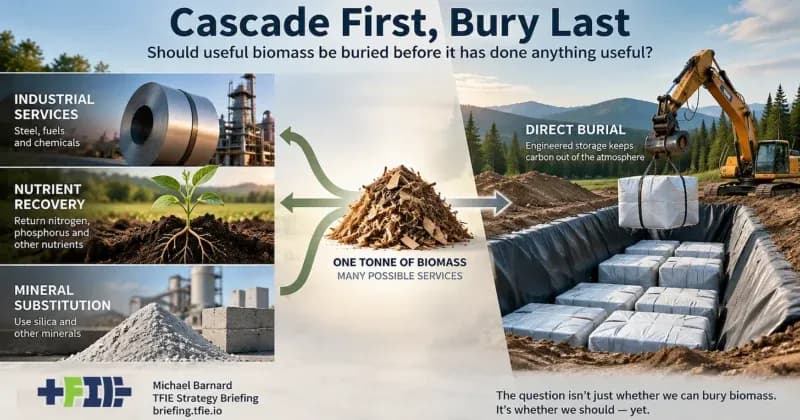
The core argument presented in the assessment is that biomass should not merely be viewed as atmospheric carbon captured through photosynthesis. Instead, it can serve multiple functions, including providing chemical energy, industrial molecules, and nutrient value. For example, forest materials can continue to fulfill ecological roles prior to their removal. Therefore, while carbon storage is a valid use of biomass, it is crucial to consider whether this is the most beneficial option or if the biomass can be utilized in other productive pathways first.
The analysis suggests that resource sequencing—prioritizing the most beneficial use of biomass—should be the guiding framework for decision-making. Some biomass types have valuable applications that can replace fossil fuels, while others may not fit into productive pathways effectively. For instance, lignocellulosic residues may not perform well in anaerobic digestion, and the transportation of wet biomass can be costly. In such cases, direct burial could be a viable climate strategy, but the decision should be made after evaluating the potential for other productive uses.
Graphyte's carbon removal markets complicate the allocation of biomass resources because the company's output can be easily quantified. The incoming biomass can be weighed, and process emissions can be accurately calculated, allowing for precise tracking of stored blocks and the issuance of carbon removal claims. In contrast, productive biomass pathways often distribute their climate benefits across various sectors, such as fossil fuel displacement in energy markets or nutrient recovery in agriculture. This complexity can make accounting for carbon benefits more challenging.
As demand for carbon removal grows, the competition for biomass resources will intensify among various industries, including aviation, shipping, chemical production, and construction. The classification of biomass as a waste residue does not eliminate its potential for valuable applications, especially when carbon-removal buyers are willing to pay substantial amounts to keep such materials out of circulation.
A critical point raised in the analysis is that while Graphyte and similar biomass burial solutions generate carbon credits, they do not provide the same economic value extraction as other biomass uses. Processes that convert biomass into useful products while also sequestering carbon dioxide are likely to be more economically sustainable in the long run. Therefore, Graphyte's method requires a more balanced evaluation rather than a simplistic endorsement or rejection.
In conclusion, Graphyte's Carbon Casting process holds promise for delivering significant carbon removal. However, the strategic question remains: should biomass be directed towards immediate carbon storage, or can it be utilized in a manner that yields additional climate or industrial benefits first? A comprehensive approach that widens the system boundary is essential to optimize the use of biomass in the transition to a more sustainable future. The full assessment from CleanTechnica provides detailed comparisons of various feedstocks, including carbon and emissions accounting, nutrient recovery, and economic evaluations regarding the attractiveness of different pathways for biomass utilization.
More about CleanTechnica
View all
EU and China Strike Deal to Halve Plug-In Hybrid Imports
The European Union and China have reached a significant agreement to reduce the export of plug-in hybrid vehicles by 50% over the next four years, while China will lower tariffs on certain European goods.
Oct 10, 2026
XPENG Launches YOYO Robotaxi, Pioneering Autonomous Transportation
XPENG has officially launched its new robotaxi model, the YOYO, marking a significant advancement in autonomous driving technology and its commercial application in China.
Oct 10, 2026Get green transition news in your inbox