IRU and T&E Advocate for EU Framework on Semi-Private Truck Charging
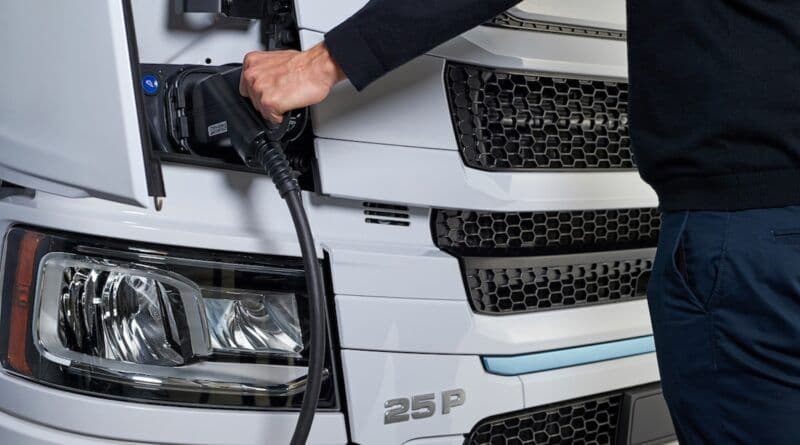
On October 9, 2026, the International Road Transport Union (IRU) and Transport & Environment (T&E) jointly urged the European Commission to include a framework for semi-private truck charging in the upcoming review of the Alternative Fuels Infrastructure Regulation (AFIR). This initiative aims to address the growing need for effective charging solutions as the logistics sector increasingly shifts towards zero-emission vehicles.
A significant portion of truck charging is anticipated to occur at operators' depots and destinations, where the integration of charging into daily operations can optimize energy needs and reduce reliance on public charging networks. However, depot charging alone is insufficient, as trucks often operate beyond their home bases and require access to charging facilities throughout their journeys. Smaller operators, in particular, may lack the resources or infrastructure to support adequate charging at their premises.
The existing EU framework primarily focuses on public and private charging, leaving a gap for semi-private business-to-business charging infrastructure. This category would allow transport operators, logistics companies, and shippers with existing charging infrastructure at their locations to voluntarily share part of their capacity with other operators. For instance, larger companies could offer charging access to subcontractors and smaller firms, thus enhancing the overall charging ecosystem.
IRU and T&E emphasize that semi-private charging infrastructure should not be classified as fully public charging stations. The main objective for transport and logistics companies is to support their operations, and they should retain control over access to their facilities. Therefore, the proposed EU regulatory framework should formally recognize semi-private charging as a distinct category, establishing flexible conditions that allow operators to share their capacity without being categorized as public charging providers.
To facilitate this, the organizations are advocating for specific revisions to the General Block Exemption Regulation (GBER) to ensure that semi-private infrastructure does not incur excessive administrative burdens or jeopardize existing financial support. This revision presents an opportunity for Member States to create a coherent approach to supporting semi-private charging infrastructure.
The need for semi-private charging infrastructure is particularly critical for small and medium-sized enterprises (SMEs). Larger operators typically have more resources to invest in depot infrastructure, and by allowing access to smaller companies, the ecosystem can become more inclusive. This would not only enhance the public charging network but also provide additional capacity at strategic transport sites, especially around depots and logistics hubs.
As the demand for zero-emission truck fleets rises, the integration of public, private, and semi-private charging solutions is essential. The organizations are calling for the Commission to implement a framework that includes: 1. Establishing a separate EU category for semi-private charging with clear minimum criteria, allowing for voluntary third-party access while enabling infrastructure owners to maintain control over their operations. 2. Providing legal clarifications within AFIR to prevent logistics companies that share charging infrastructure from being classified as charging point operators (CPOs) or electricity suppliers. 3. Removing barriers related to permitting and grid connections that could impose unnecessary regulatory burdens. 4. Integrating semi-private charging into national infrastructure and energy plans to ensure comprehensive coverage across the EU. 5. Simplifying the process for making charging capacity available to third parties to encourage participation without overwhelming bureaucracy. 6. Enabling semi-private infrastructure to access appropriate EU and national funding and support. 7. Offering guidance on funding schemes and the implementation of renewable energy directives that recognize the benefits of using renewable electricity for depot charging.
The overarching goal is to create an environment that fosters private investment in charging infrastructure while avoiding the imposition of new obligations on transport operators. Acknowledging semi-private charging as a distinct category at the EU level would represent a pragmatic advancement in accelerating the deployment of charging infrastructure and supporting the widespread adoption of zero-emission heavy-duty vehicles across the logistics sector. This initiative is expected to play a pivotal role in meeting the EU's climate goals and enhancing the sustainability of road transport.
More about EU
View all
EU and China Strike Deal to Halve Plug-In Hybrid Imports
The European Union and China have reached a significant agreement to reduce the export of plug-in hybrid vehicles by 50% over the next four years, while China will lower tariffs on certain European goods.
Oct 10, 2026
China and EU Reach Agreement to Limit Hybrid Vehicle Imports
In a significant development, China and the European Union have reached a preliminary agreement aimed at reducing the influx of Chinese-made hybrid vehicles in Europe, following extensive negotiations.
Oct 10, 2026More about T&E
View all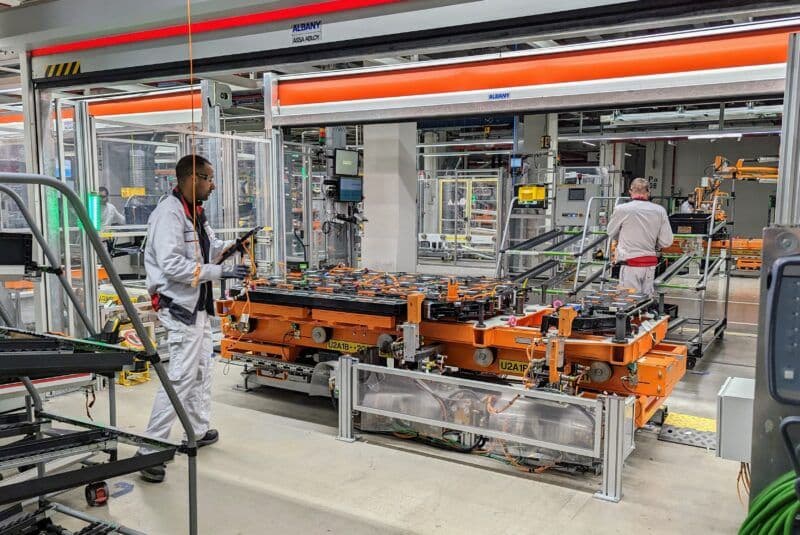
The Future of Europe's Battery Supply Chain at a Crossroads
As the European automotive sector pushes for a delay in the implementation of new battery supply chain rules, industry leaders warn that such postponements could undermine the EU's commitment to a robust 'Made in Europe' strategy.
Oct 2, 2026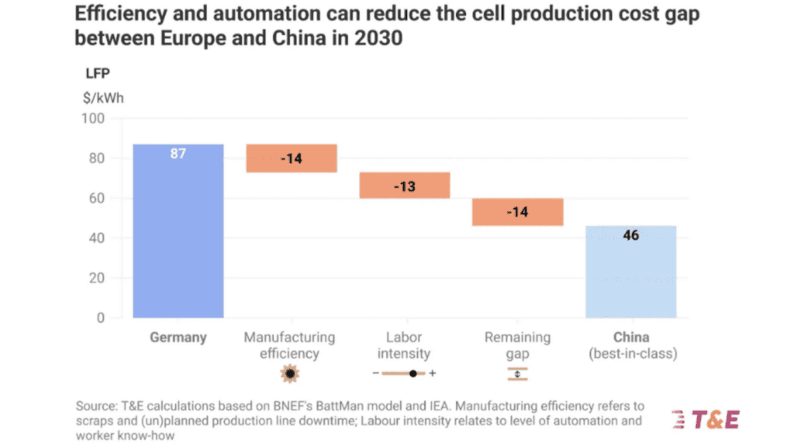
Strengthening Europe's Battery Value Chain Through the Industrial Accelerator Act
The Industrial Accelerator Act (IAA) is poised to revitalize Europe's battery value chain, which has faced significant challenges in recent years. Transport & Environment (T&E) emphasizes the feasibility of achieving IAA targets to ensure local battery production meets rising demand.
Get green transition news in your inbox