

Tesla Launches V2H Bidirectional Charging; EV4EU Trial Concludes in Europe
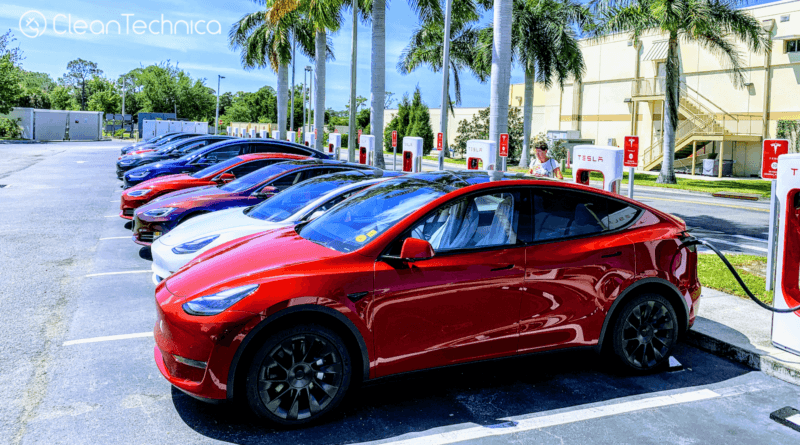
On October 11, 2026, Tesla announced that every Model 3 and Model Y manufactured in the United States from October 1, 2026, onwards is equipped with the capability for vehicle-to-home (V2H) operation. Some earlier models, built as far back as April 2026, may also have this technology available due to the installation of necessary hardware. Owners can verify their vehicle's capability by accessing the settings on their car's touchscreen and checking for 'Powershare Support: Enabled.' If this feature is not present, it cannot be added via a software update, as it requires specific new power electronics.
Tesla's Powershare system was initially developed for the Cybertruck, allowing it to provide backup energy to homes during outages. The Powershare Home Backup Bundle includes a Universal Wall Connector and a Powershare Gateway, which are essential for the system to function. While Model 3 and Model Y owners will need a Powerwall 3 battery and a Wall Connector, the Cybertruck can operate without a Powerwall, although it still requires a Powershare Gateway for functionality. The Powershare system can deliver up to 11.5 kW of power, potentially allowing a fully charged Model 3 or Model Y to power a home for approximately two days.
Colby Hastings, Tesla's senior director of residential energy, emphasized the significance of this development: "With Powershare Home Backup, choosing a Tesla is no longer just a decision to buy an EV. It’s a decision to invest in home energy resilience." This innovation comes at a time when thousands are without power in regions like Alabama, Florida, and Georgia, highlighting the practical benefits of electric vehicles during grid outages.
In conjunction with Tesla's announcement, the European Union has concluded its four-year EV4EU study on vehicle-to-grid (V2G) technologies. This initiative tested various flexibility solutions in four EU countries, focusing on user engagement and the integration of renewable energy resources. The project coordinator, Hugo Morais, noted that the study successfully designed and tested a functional bidirectional charging station prototype and developed open-source tools for charging point operators.
The EV4EU study revealed that integrating bidirectional charging points in residential and public settings can significantly reduce charging costs and enhance renewable energy integration. In Portugal, for example, the project achieved a 14% reduction in household charging costs and improved renewable energy usage by nearly 22%. In Slovenia, the integration of virtual power plants demonstrated the added value of V2X over traditional smart charging methods, while Athens focused on the impact of EVs on public charging environments, validating the importance of dynamic pricing.
Denmark's efforts concentrated on managing charging clusters in parking lots, particularly where local renewable generation was available. The study utilized distributed control algorithms to optimize power distribution, reduce costs, and minimize fossil fuel use.
The EV4EU study also explored various business models, regulatory frameworks, and user needs, concluding that bidirectional charging can only function effectively when considering driver mobility requirements and battery aging. The findings suggest that coordinated communication and appropriate market models are essential for successful implementation.
Previously, Tesla had hesitated to adopt V2H or V2G technologies due to concerns over battery longevity. However, the EV4EU study indicates that battery degradation is less of a concern than previously thought, suggesting that batteries may outlast the vehicles they power. This opens up possibilities for electric cars to form virtual power plants, enabling communities to harness excess renewable energy.
Overall, the advancements in V2H technology by Tesla and the insights gained from the EV4EU trial signify a pivotal moment in the evolution of electric vehicles. As the transition to electric mobility continues, these developments could catalyze a new ecosystem where electric vehicles contribute not only to individual mobility but also to broader energy resilience and sustainability efforts.
Get green transition news in your inbox